Your roadmap has more approved projects than your team will finish this year. So the list gets reprioritized every quarter, and the work that would actually change how the business runs stays three rows from the top.
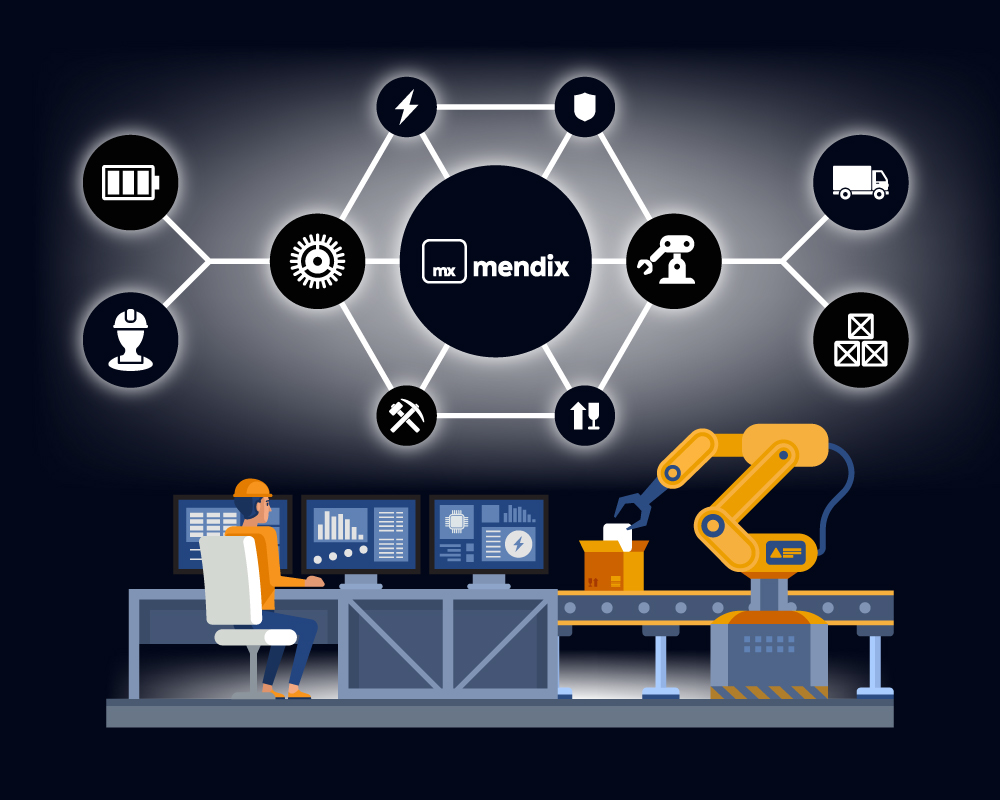
We build on Mendix, the low-code platform Siemens owns. Applications are modeled from components your architects already approved, so the first one reaches real users in weeks. And because Mendix belongs to Siemens, it reaches Teamcenter, Opcenter and Insights Hub natively.
Digital transformation on low-code means putting software where manual effort used to be — the applications that replace the spreadsheets, the platform they run on, and the model that decides what gets built next. MXTechies delivers this on Mendix for US enterprises, starting with one application in production and building the governance around it.
Procurement wants a supplier portal. Quality wants inspections off paper. Neither is worth pulling a senior engineer off the ERP program for, so the business builds a spreadsheet. Six months later that spreadsheet is load-bearing.
The person who understood it retired. The vendor stopped answering. Every year it takes a bigger share of the budget meant for something new.
The first project went well, then nothing, because nobody defined who approves the next one. Two years on: five applications, three security models, no owner.
It passed UAT. The team still keeps the real numbers elsewhere, because it asks for fourteen fields when the job needs four.
It does not make engineers faster. It changes who can build. A supplier portal that would have taken a quarter becomes a few weeks of configuration, and the bottleneck moves to how fast the business decides.
When building stops being the slow part, the constraint is how fast the business decides. That is fixable.
Role-based access, single sign-on and audit trails come from the platform.
ERP, CRM, PLM, MES and legacy databases through published connectors. For Siemens estates, natively.
| Service | What it covers |
|---|---|
| Assessment and roadmap | What you run, what it costs, and the sequence to fix it |
| Application delivery | Web, mobile and workflow apps with access control and audit from release one |
| Legacy modernization | Interface and workflow move first. Data usually stays where it is |
| Enterprise integration | SAP, Oracle, Salesforce, Teamcenter, Opcenter, IoT, legacy databases |
| Center of excellence | Standards, component library and training so your team builds without us |
| Portfolio governance | One security model, one approval path, one view of what exists |
Pick the process where manual cost is highest and the result is obvious outside IT. Build it, put it in front of real users.
A center of excellence with a named owner, development standards, a shared component library, your developers trained. Almost everyone skips this.
An approval path, automated pipelines, adoption tracked per application, retirement of the ones nobody opens.
In manufacturing we usually start with digital work instructions, quality capture, or a Teamcenter or Opcenter extension.
Shop floor, quality, MES, and operational applications
Explore industry
Inventory, order management, and customer portals
Explore industry
Workflow automation and internal enterprise tools
Explore industry
Secure process automation and reporting applications
Explore industry
Claims, policy, and compliance workflows
Explore industry
Tracking, planning, and operational visibility
Explore industry
EV operations, manufacturing, and analytics
Explore industry
Traceability, quality, and production apps
Explore industryFewer can connect it to the systems that run your plant.
Putting software where manual effort used to be: the applications that replace the spreadsheets, the platform they run on, and the model that decides what gets built next. Do only the first and you get a few good applications and no way to produce more.
It removes work rather than compressing it. Applications are modeled on connectors that already exist, so a portal is configured rather than written. It also widens who can build.
Usually because nobody defined what happens after the pilot. It succeeds, then stalls, because there is no approval path for the next application and no owner for the platform.
A first application typically reaches real users in weeks. Portfolio-level change takes several quarters, because it depends on training, standards and ownership rather than build speed.
Ongoing. It changes how you deliver software. Treating it as a project produces one good application and a quiet return to the old way within a year.
From the platform, not per application. Role-based access, single sign-on and audit trails configured at the start. Cloud, hybrid or fully on-premises.
Yes, and that is usually where the value is. Mendix connects to SAP, Oracle, Salesforce, Teamcenter, Opcenter, IoT platforms and legacy databases. Because Mendix is a Siemens company, the Siemens connection is native.
Baseline it before you build. Cycle time before and after, manual hours removed, delivery lead time, and how much budget goes to maintenance versus new capability. Take the baseline during assessment, because nobody can reconstruct it later.
We do not. Bring us a process that spans Teamcenter, Opcenter or SAP, and we will show you what it looks like as one application instead of three handoffs. Forty-five minutes, your systems, no preparation needed.