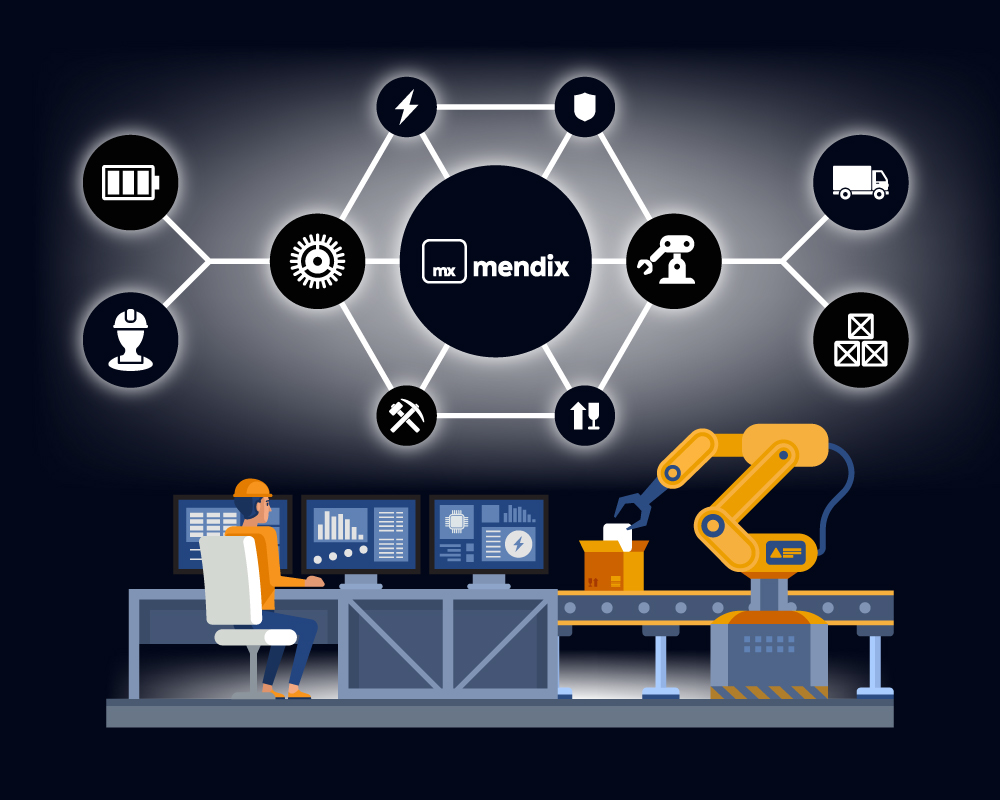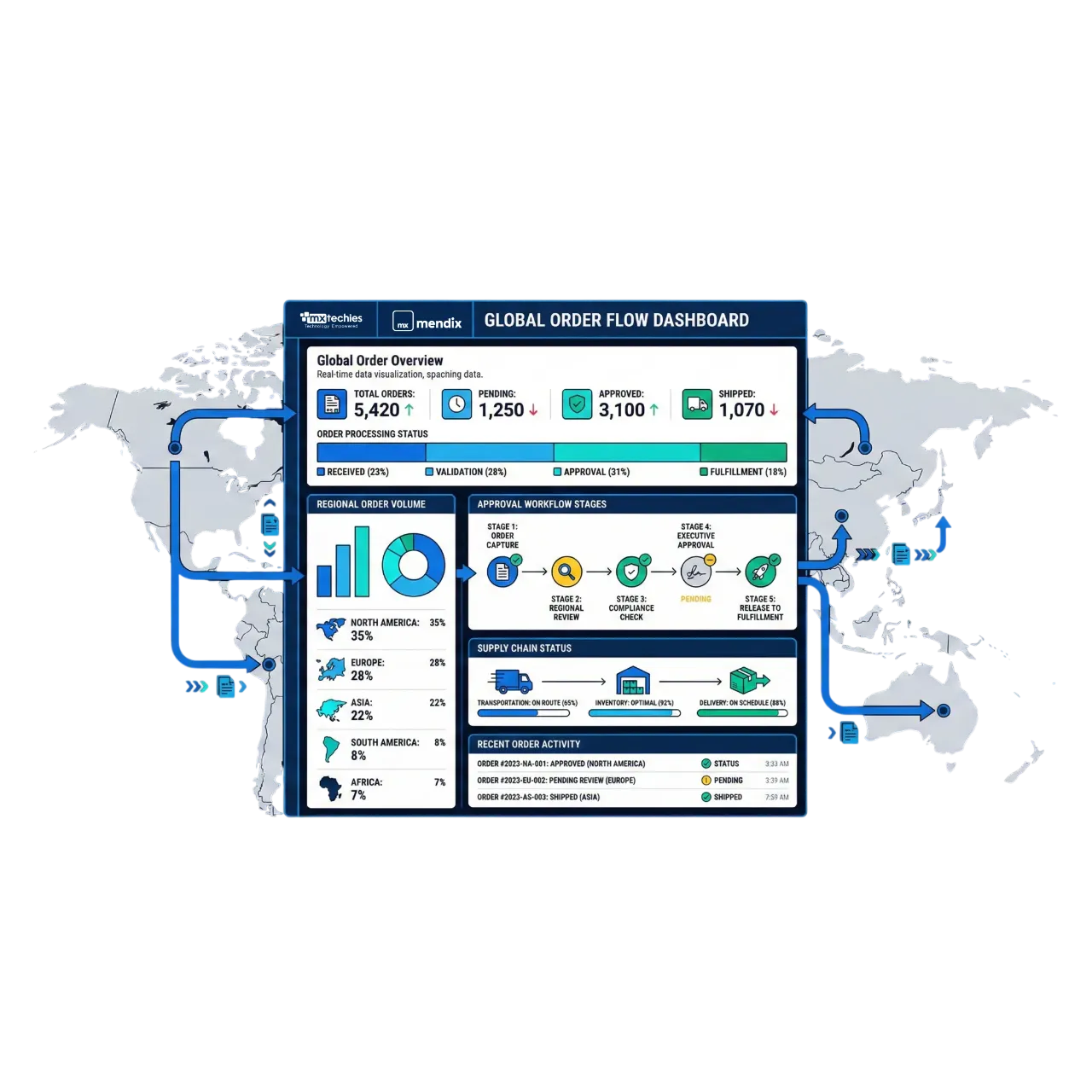
We do not hand over at go-live. We design, build and run enterprise applications on Mendix for US organizations, covering architecture, systems integration, QA automation, DevOps and long-term maintenance.
Application engineering is the practice of designing, building and operating software across its full lifecycle rather than treating the build as the end point. On Mendix it covers digital enterprise assessment, evolutionary architecture, web and mobile development, systems integration, QA automation, DevOps and ongoing maintenance, delivered by one accountable team.
Architectures and practices for every stage of the application lifecycle — from build to run to modernization.
| Capability | What it covers |
|---|---|
| Assessment and strategy | Business landscape, opportunities and current capabilities. The most expensive applications are the ones scoped before anyone checked what already existed |
| Web and mobile | Progressive web and mobile applications, built for search visibility and load performance |
| Systems integration | APIs, streaming, aggregation, replication, service bus, async messaging, file transfer |
| QA and testing | Automation, functional, performance, localization, mobile, regression — every release, not only the first |
| Maintenance | The part most build partners do not cover, and the part that decides lifetime cost |
A distributed team sized for the phase you are in, so engineers join an existing team rather than starting a new one. Design is used as a decision-making tool, not a finishing layer, keeping the people who will actually use the application at the centre of what gets built. Architecture is evolutionary, built with fitness functions designed to absorb change over years rather than lock in early assumptions. Delivery runs on a shift-left DevOps culture, with automated pipelines and continuous delivery built in from the start. And maintenance, testing and DevOps are part of the offer rather than a separate conversation after go-live.
Application engineering overlaps a few other services. Here's the boundary we hold.
| Page | Answers | Keep out of it |
|---|---|---|
| mendix-app-development | Build me an application | Lifecycle, maintenance, DevOps |
| application-engineering | Own the full lifecycle | Single-app build projects |
| legacy-modernization | Replace an outdated system | General engineering work |
| cloud-engineering | Run it at scale on cloud | Application build |
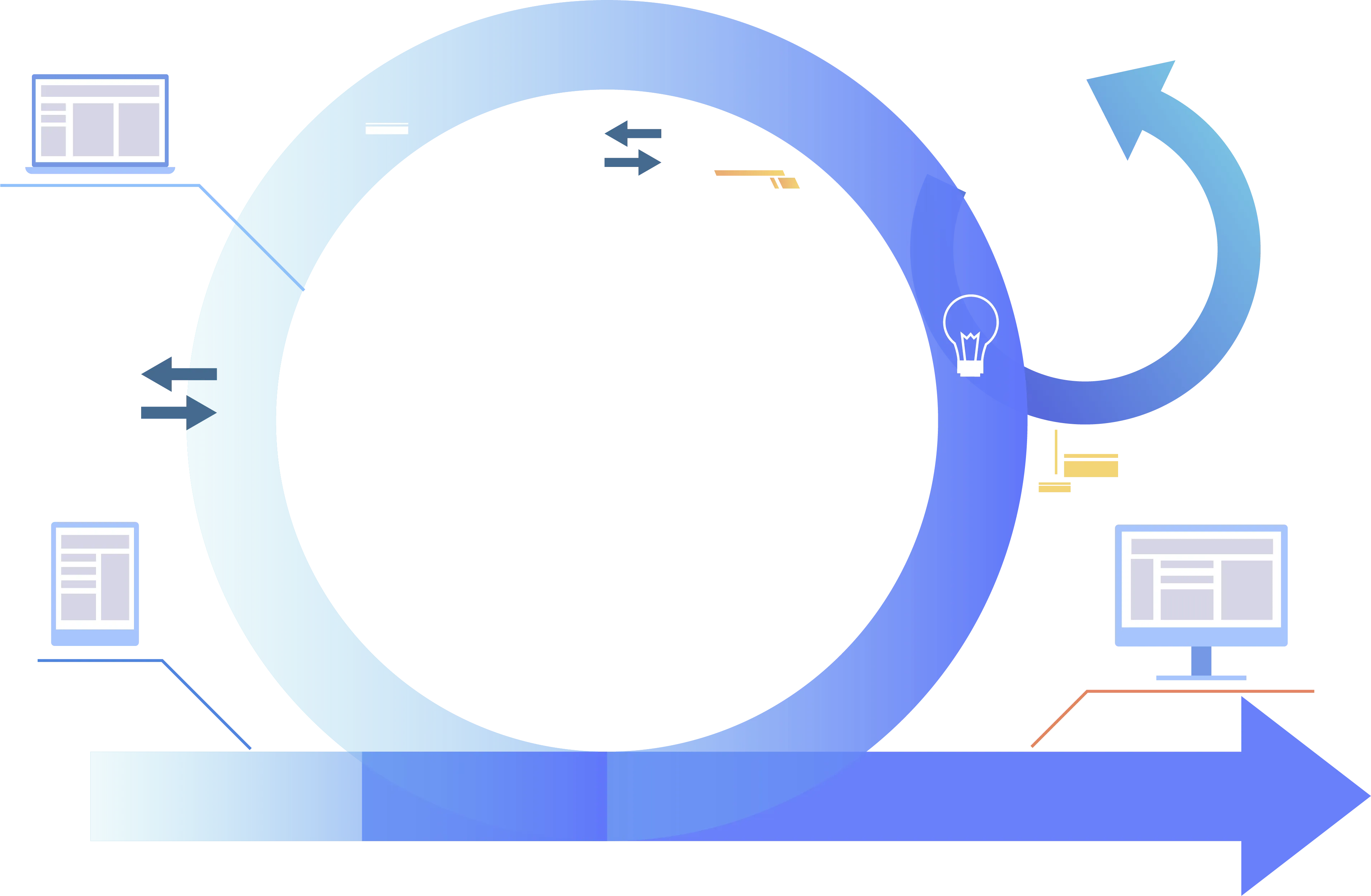
A consistent delivery rhythm across every application engagement — from assessment to a production-grade, scalable release.
A digital enterprise assessment covering the business landscape, opportunities and current capabilities.
Evolutionary architecture with fitness functions aligned to your long-term goals.
Web, mobile and integration engineering delivered by certified Mendix developers.
Maintenance, testing and DevOps automation to keep applications running at scale.
Designing, building and operating software across its full lifecycle rather than treating the build as the end point. Assessment, architecture, development, integration, QA automation, DevOps and maintenance under one accountable team.
App development delivers an application. Application engineering owns what happens around and after it: architecture, integration, test automation, the release pipeline and maintenance. One application to a defined scope is app development. An application that runs and evolves for years is engineering.
Mendix as the platform, with Mendix Cloud for deployment. QA uses Selenium and Appium for web and mobile automation, JMeter for performance, Postman for APIs, Katalon for combined automation, Mantis for defect tracking.
Yes, and it is a common way engagements start. Work begins with an assessment of architecture, dependencies, technical debt and test coverage. An immediate rebuild is rarely the right first answer, and we will say so if the application is sound.
Through APIs, streaming, aggregation, replication, service bus, async messaging and file transfer. Applications connect to SAP and Oracle, CRM, Siemens Teamcenter and legacy databases. Integration scope drives the timeline more than screen count does.
Four stages: assess, architect, build, operate. Most start with the assessment, because scoping a build before checking what exists is how budgets get spent twice.
Either team can, and it should be decided before the build because it shapes how the application is structured. Handover includes documentation, model walkthroughs and enablement.
Yes. Role-based access, enterprise authentication and audit trails from the first release, deployment to cloud, hybrid or on-premises, and governance through defined environments and release controls.
Tell us what it costs to keep running today. We will assess architecture, dependencies, technical debt and test coverage, and tell you whether it needs rebuilding or just needs owning properly. Forty-five minutes, no prep.