Data Hub + Mendix: Unlocking Enterprise-Wide Data Integration
Why Data Integration Matters
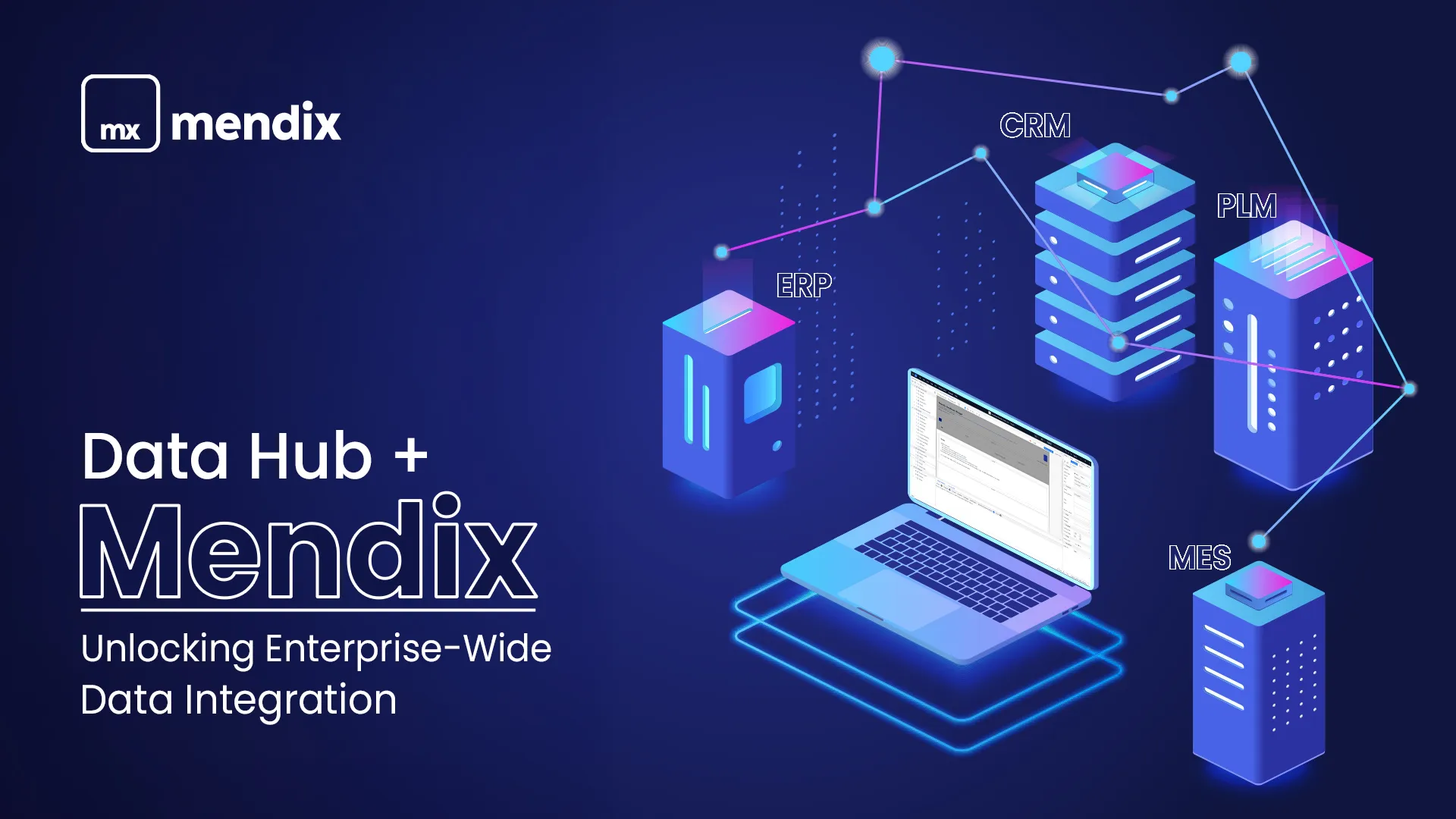
Modern enterprises run on multiple systems like ERP, CRM, PLM, MES, analytics platforms, cloud services, and custom apps. These often create data silos, slowing decisions, reducing operational efficiency, and limiting real-time insights.
Mendix Data Hub offers a unified, governed, and scalable solution, connecting and reusing data across your enterprise without complex integrations.
For more on Mendix capabilities, check out our Mendix Services page.
What Is Mendix Data Hub?
Mendix Data Hub is a centralized data integration platform that connects Mendix apps to enterprise systems via a standardized, searchable data catalog.
IT teams publish trusted datasets once, and they can be safely reused across multiple Mendix applications, eliminating repetitive integration work.
Key Features of Mendix Data Hub
-
Governed, searchable enterprise data catalog
-
Reusable canonical data models
-
Direct connectivity via REST APIs, OData, or Mendix entities
-
Metadata-driven integration for traceability
-
Drag-and-drop data consumption in Mendix Studio Pro
-
Clear separation between data providers and consumers
Benefits of Mendix Data Hub
1. Faster, Consistent Data Integration
-
Publish datasets once
-
Reuse across multiple apps
-
Reduce development time and errors
2. Eliminate Data Silos
Supports integration with SAP, Salesforce, Oracle, Teamcenter, and legacy platforms. Expose data through a single abstraction layer, making backend systems easier to consume.
3. Enterprise Governance and Security
-
Role-based access control
-
Versioning and lifecycle management
-
Compliance with GDPR, ISO, SOC, and internal policies
4. Accelerated Low-Code Development
-
Focus on business logic and UX
-
Avoid redundant integrations
-
Faster delivery with fewer defects
5. Scalable Enterprise Architecture
-
Domain-driven, composable architecture
-
Decoupled applications
-
Reusable enterprise data products
Common Use Cases
-
Production dashboards combining MES, ERP, and quality systems
-
Centralized customer experience apps using CRM + ERP data
-
Supplier portals with real-time inventory and order tracking
-
Shop-floor applications integrated with IoT and MES
-
Employee self-service portals for HR, ITSM, payroll, and learning
-
Multi-app Mendix landscapes reusing the same master data
Mendix Data Hub vs Traditional Integration
| Traditional Integration | Mendix Data Hub |
|---|---|
| Point-to-point APIs | Centralized data catalog |
| Duplicate data models | Standardized canonical models |
| High maintenance | Reusable and governed |
| Tight system coupling | Loosely coupled architecture |
| Slow change management | Fast adaptability |
Best Practices for Implementing Mendix Data Hub
-
Define clear data ownership per domain
-
Publish validated datasets only
-
Apply role-based access
-
Version datasets to prevent breaking changes
-
Aligning with enterprise API and integration strategy
-
Educate teams to consume data via Data Hub, not direct APIs
Conclusion
Mendix Data Hub transforms enterprise data integration by making data discoverable, reusable, and governed at scale. It eliminates integration bottlenecks and accelerates low-code application development.
MXTechies help organizations implement Mendix Data Hub securely and at scale, connecting your Mendix applications to the full enterprise system landscape efficiently.