Mobile talent is scarce
Experienced iOS and Android engineers are among the harder US hires, and most specialize in one platform. Two platforms means two skill sets, which puts the roadmap at the mercy of a small hiring pool.
One codebase for iOS, Android, progressive web and responsive web. Native and offline-first applications, designed and shipped from one visual platform by a certified Mendix partner.
Mendix mobile app development is the practice of building native iOS and Android apps, progressive web apps, and offline-first field applications on the Mendix low-code platform, from a single visual model rather than separate codebases per platform. MXTechies builds these for US enterprises across manufacturing, logistics, financial services and insurance, typically delivering a working MVP in four to eight weeks.
Mobile is where customers transact and where deskless staff actually work. For most US enterprises it is also where delivery stalls, for three reasons that compound.
Experienced iOS and Android engineers are among the harder US hires, and most specialize in one platform. Two platforms means two skill sets, which puts the roadmap at the mercy of a small hiring pool.
Swift, Kotlin, a web front end and the backend behind them means every feature is built more than once and maintained forever. The cost is not the first release. It is release eleven.
Without camera, location, push, biometrics or offline storage it feels like a website in a wrapper. An app that needs a signal is useless where the work happens.
One platform, five ways to reach your users.
| Type | What it is | Typical use |
|---|---|---|
| Native mobile | React Native, fully featured iOS and Android | Customer apps, anything needing device features |
| Progressive web apps | Any browser, any device, no install step | Occasional users, contractors, anyone you cannot ask to install software |
| Responsive web | Desktop, tablet and phone from one model | Internal tools used at a desk and on the move |
| Offline-first field apps | Full function with no connectivity, syncing on reconnect | Inspection, service and logistics across large territories |
| Customer and supplier portals | Scoped external access | External parties who should see only their own data |
Mendix removes the multi-codebase problem rather than managing it. One visual model produces the native app, the progressive web app and the responsive web experience, assembled from reusable components rather than hand-written per platform. It also shortens the feedback loop, so the second version ships while the requirement is still current.
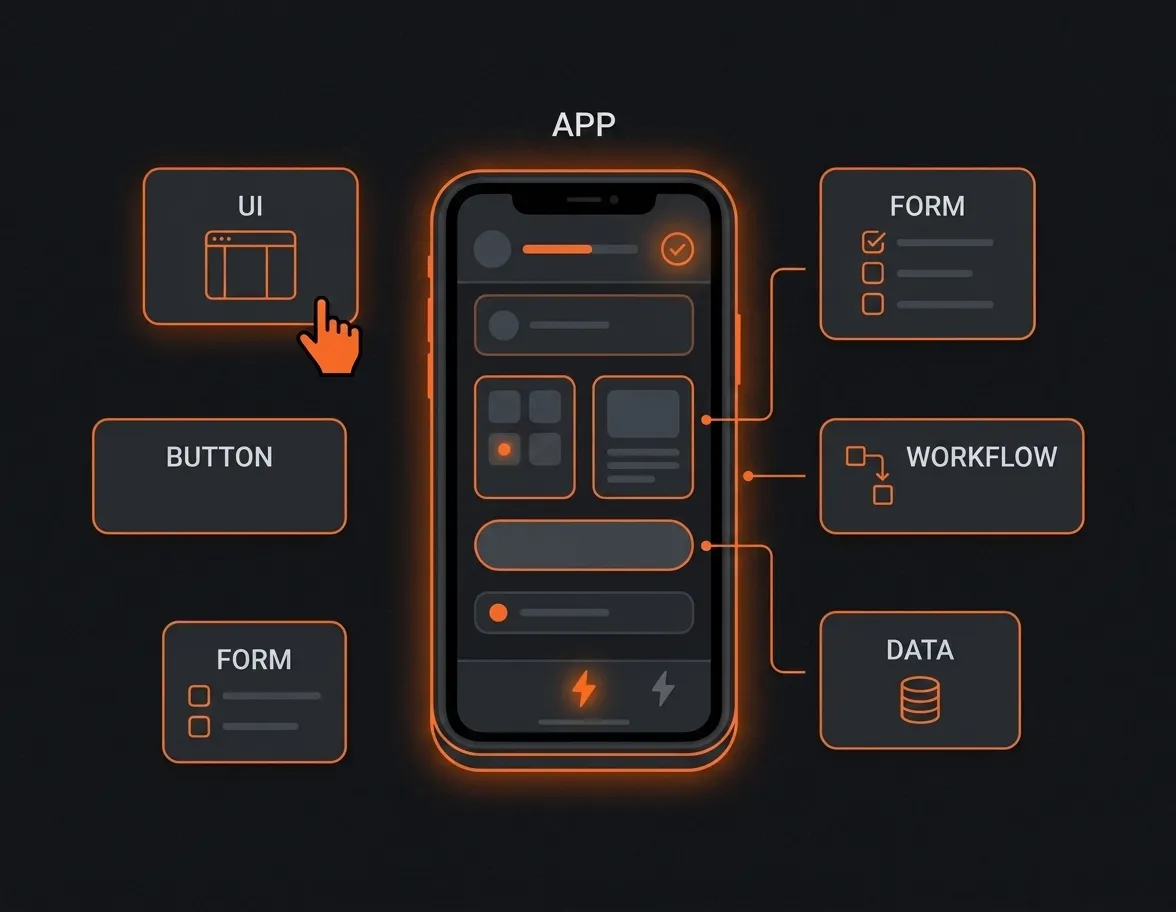
A single codebase serving iOS, Android, progressive web and responsive web, which is what makes a two-platform roadmap affordable.
Single sign-on, identity and access management, and enterprise encryption. Authentication runs against your existing identity provider rather than a parallel user store.
Prebuilt templates, logic and interface elements that shorten every sprint after the first.
Connects to SAP, Salesforce, Siemens systems, AWS and Azure. For US enterprises the mobile app is rarely the hard part. Reaching the systems behind it is.
Automation and AI assistants keep the build phase short and the release cadence steady.
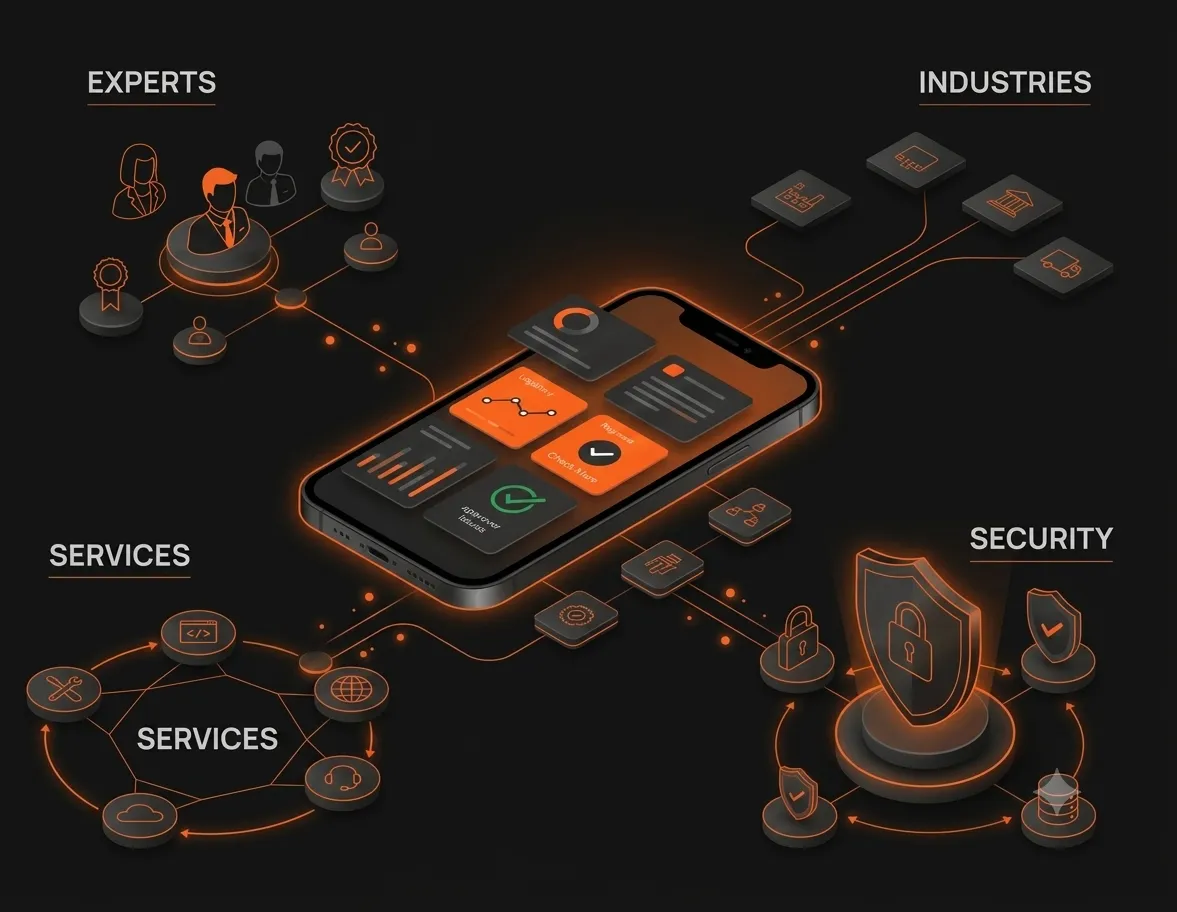
A working MVP typically lands in four to eight weeks. Timeline follows how many systems it integrates with and how many user roles it serves, not the number of screens.
Yes, and it is a main reason enterprises choose this route. Applications work with no connectivity and sync automatically once the device reconnects, which matters for field teams across large US territories.
Real native. Mendix builds through React Native, producing a genuine native binary with native gestures and device access — camera, location, push, biometrics — not a web view in a shell.
No. One visual model produces both, plus the progressive web and responsive web versions. That is the cost difference: every feature is built once rather than three times and maintained forever.
Yes. Single sign-on, enterprise encryption and role-based access from the first release. Cloud, hybrid or on-premises where data cannot leave your network.
Yes — SAP, Salesforce, Siemens systems, AWS and Azure, plus internal APIs and legacy databases. Integration is configured through connectors rather than written per platform.
Yes. Developers without deep native mobile backgrounds can build production applications, which is the point: your roadmap stops depending on a small and expensive hiring pool.
Through your existing mobile device management or the public app stores, depending on whether the audience is internal or external. Distribution is decided during scoping because it affects the build.
Inspection, service, logistics, quality — name the one where the record gets written twice. We will show you what it looks like as an offline-first app on the device already in their hand. Forty-five minutes, no prep.