Move Oracle Forms, mainframe, Lotus Notes and aging custom applications onto Mendix low-code, in phases, with your operations running throughout.
Legacy modernization is the process of replacing or extending outdated business systems with modern applications, without a single high-risk cutover. On Mendix, MXTechies rebuilds legacy interfaces and workflows as cloud-ready applications while the underlying data stays where it is, so US enterprises modernize in stages rather than replace in one attempt.
For most US enterprises the pressure to modernize does not come from the technology team wanting newer tools. It comes from four things that arrive on their own schedule.
COBOL, Oracle Forms and Domino skills sit with engineers near the end of their careers. The pool shrinks, the day rate rises, and spending more does not fix it.
End-of-support dates force a decision whether or not you are ready, and unsupported software becomes an audit finding.
When most of the budget keeps existing systems running, nothing is left for work that changes the business.
Overlapping ERP, CRM and custom applications. Consolidating them is a modernization program whether or not anyone calls it that.
Refresh a process or rebuild the estate. Mendix supports all three approaches, and most programs use more than one.
| Approach | What it means | When to use it |
|---|---|---|
| Extend | Keep the core running, build applications around it | The core works; the interface is the problem |
| Migrate gradually | Introduce modern applications to replace outdated ones in stages | Genuinely end of life, but one cutover is unacceptable |
| Replace component by component | Rebuild components without disrupting operations | A monolith where some parts are more urgent |
The systems US enterprises bring to us most often.
| System | Usual trigger | What we build |
|---|---|---|
| Oracle Forms | Support timelines, shrinking developer pool | Rebuilt interface and workflow, Oracle database retained |
| Mainframe | Retiring COBOL skills, platform cost | A modern layer over it, or staged replacement |
| Lotus Notes and Domino | Platform end of life | Rebuilt as web and mobile apps, data migrated |
| SAP-adjacent workflow | Processes needing SAP data that do not belong in SAP | Applications alongside SAP, upgrade path intact |
| Aging custom software | The original developer or vendor is gone | Assessment first, then rebuild, extend or retire |
| ERP, CRM, HR, finance | Cost, usability, or inability to integrate | Modern applications over existing data |
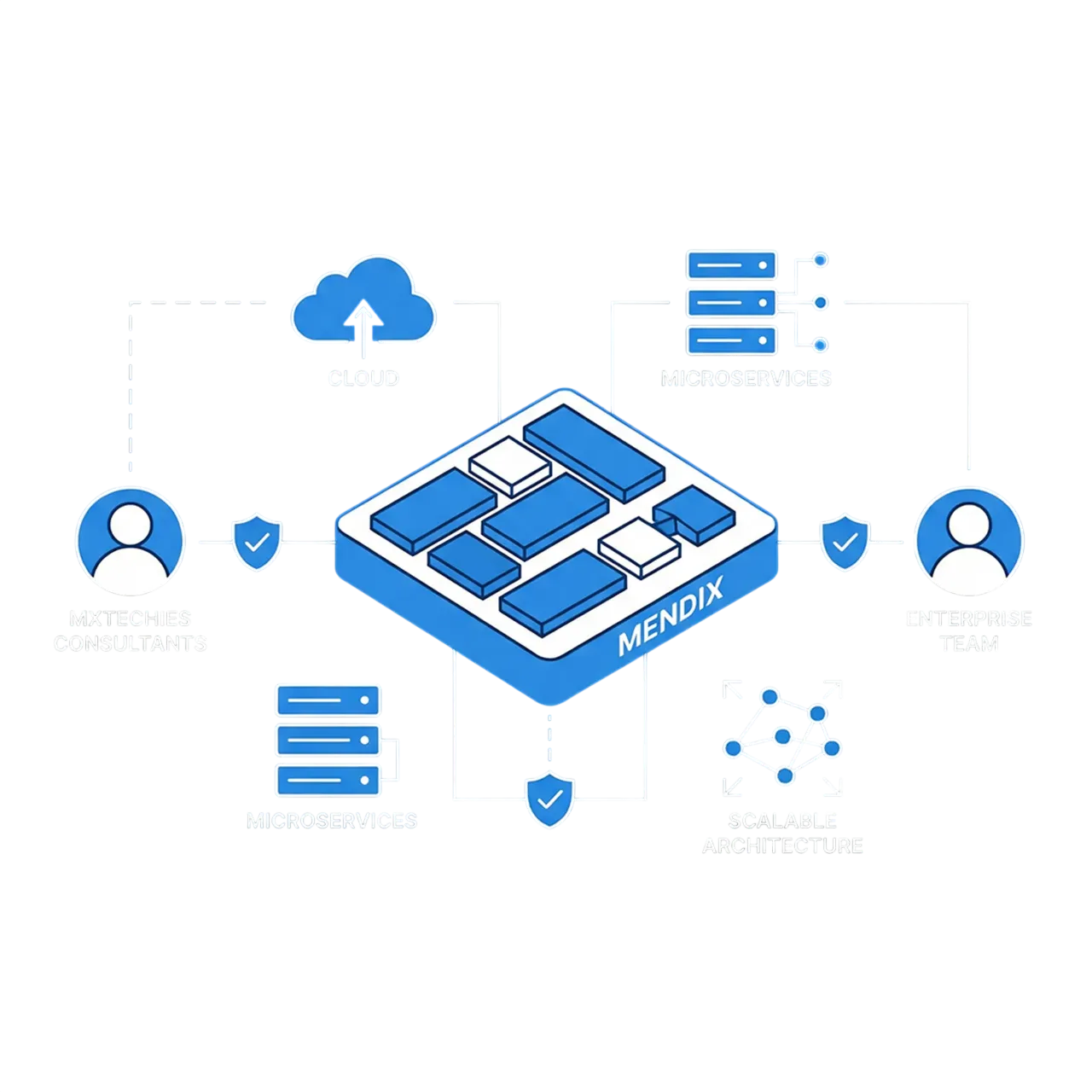
Mendix is a future-ready, enterprise-grade low-code platform built to meet the evolving needs of technology and business. It helps organizations modernize faster, control costs, and scale confidently.
Developers, business analysts and domain experts work on the same visual model, which removes the translation step between what the business needs and what IT builds. Applications deploy to public, private, hybrid or on-premises environments — for regulated US industries, the on-premises option is often what makes the project viable at all. Open APIs connect to existing systems, CI/CD pipelines and testing tools, so modernized applications join your existing engineering practice. The result is a unified, high-performance experience across web and mobile, governed consistently as the portfolio grows from a single departmental application to an enterprise-wide program.
Full system analysis to identify pain points, dependencies and modernization priorities, with continuity planned in from the start.
Critical components rebuilt on Mendix as modular, cloud-ready applications that are easier to maintain.
New applications connected to existing enterprise systems, data sources and APIs, keeping end-to-end connectivity intact.
Data migration and validation handled with integrity and compliance requirements preserved.
Ongoing performance monitoring, optimization and scaling once the modernized systems are live.
Replacing or extending outdated business systems with modern applications, in stages rather than one high-risk cutover. On Mendix the interface and workflow are rebuilt while the data stays where it is.
Oracle Forms, mainframe applications, IBM Lotus Notes and Domino, SAP-adjacent workflow, aging custom software, and ERP, CRM, HR and finance systems. Mendix connects through open APIs, so the existing database is usually retained.
It should not, because systems are modernized in stages rather than replaced in one cutover. The realistic caveat: data migration and integration switchover need a planned window, scoped before work starts.
Yes. Migration follows a validated process covering data integrity, access control and compliance, tested against a representative environment before it touches production and reconciled after the move.
A first modernized application typically lands in weeks, and a full program runs in stages over months. Timeline follows integration count, estate scope, and how quickly data access can be arranged — not screen count.
No, and in most cases you should not. Extend when the core still works. Migrate gradually when it is at end of life but one cutover is unacceptable. Or replace component by component.
Yes. Public cloud, private cloud, hybrid and on-premises from the same application. For regulated US industries that option is frequently what makes the project viable at all.
Either team can, and it should be decided before the build because it shapes how the applications are structured. Handover includes documentation and enablement.
Not the license — the maintenance, the specialists, the workarounds. We will assess what modernizing takes, and tell you if extending it is the better answer. Forty-five minutes, no prep.